
Reflective Insulation: Foil Wall Wrap – Is It Necessary?
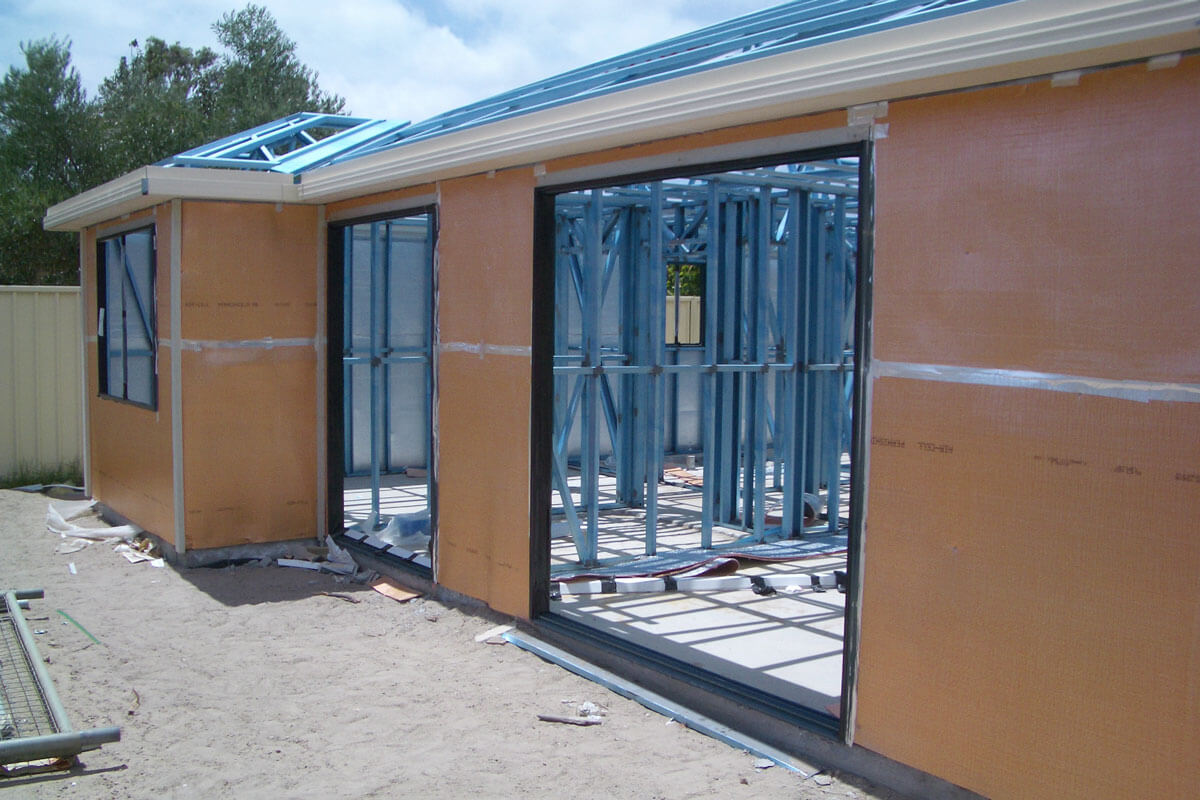
Wall sarking or reflective foil wrap, is a type of wall insulation that offers more than just thermal protection. It reflects radiant heat, controls moisture, and acts as a wind barrier, all of which contribute to a home’s energy efficiency and overall comfort level. But is it essential, or an optional upgrade? Let’s explore the benefits and applications of this reflective insulation.
The Purpose of Reflective Foil Wall Wrap Insulation
Wall wrap insulation, such as Sisalation, serves two main purposes. First, the reflective foil insulates the home by stopping almost all radiant heat transfer. Second, it protects the inside of the building from wind, moisture, and dust, effectively sealing it off from many of the elements. Reflective foil wall wrap can contribute to a building’s overall R-value when installed with an appropriate air gap.
Key Benefits of Using Wall Wrap Reflective Insulation
Wall sarking offers several advantages for homeowners and builders:
Enhanced Thermal Efficiency
Reflective foil, as the name suggests, works by reflecting radiant heat, reducing the amount of heat that enters the building. This helps maintain a more comfortable indoor temperature.
Protection Against Weather
An insulation wrap acts as a barrier to prevent rain from coming in whilst allowing vapor to be expelled, preventing issues like dampness, mould, and structural damage caused by condensation.
Improved Air Quality
By reducing external air and dust infiltration, sarking for walls can support a cleaner indoor environment, which is especially beneficial for those with allergies or respiratory conditions.
Why an Air-Gap is Essential for Effective Wall Wrap Insulation
Reflective foil works by bouncing radiant heat away from the building, so if it’s installed directly against another surface, such as a wall or another layer of insulation, the heat can conduct through the material instead of being reflected by it.
An air gap of approximately 25 mm is essential when installing reflective foil wall wrap. This gap ensures that the wall sarking has space to reflect heat rather than absorb or transfer it. Without this gap, the wall wrap’s ability to reduce heat transfer will be significantly compromised. The gap also allows for airflow, which can help dissipate any heat that does get through, further enhancing the insulation’s performance.
Different Types of Reflective Wall Wrap Insulation
Foil Insulation Wrap
Foil insulation wrap is particularly well-suited for regions that are consistently exposed to high or extreme heat. As it is designed to reflect radiant heat, this type of insulation significantly reduces heat transfer into the building.
Breathable Wall Wraps
Unlike traditional vapour barriers, breathable wall wraps allow moisture to escape from the building while preventing liquid from penetrating the structure. This dual functionality helps reduce the risk of mould, timber rot, and other moisture-related issues.
Thermal Reflective Wraps
Thermal reflective wraps are a highly effective solution for maintaining indoor comfort and improving energy efficiency. By reflecting radiant heat, thermal wall wrap insulation prevents heat from penetrating the building. The reflective surface, combined with an air gap, Reflective wraps are most effective in hot climates by reducing radiant heat gain.
How to Maximise the Thermal Benefit of Reflective Foil Wall Wrap
Proper Installation Techniques
To ensure your reflective foil wall wrap performs at its best:
- Cover all external exposed areas: Make sure the wrap is securely fixed and overlaps seams by at least 150mm to prevent gaps.
- Leave an air gap: Leave approximately a 20mm air space adjacent to the reflective surface to maximise heat reflection and optimise the performance of the wall sarking.
- Seal it tight: Use quality tapes or staples to secure the insulation wrap, Use flashing tapes to join the wrap to the window frames to create an air-tight seal to ensure its effectiveness over time.
Choosing the Right Reflective Wrap Product
Not all reflective wall wraps are created equal. Selecting the right one depends on your specific needs. In hot climates, choose a highly reflective wrap to efficiently block radiant heat and keep your interiors cool. For colder regions, opt for highly permeable wraps to prevent condensation issues. Remember, you should always check the R-value to ensure the product aligns with your building’s requirements.
Combining Wall Wrap with Other Insulation Types
Reflective wall wraps become even more effective when paired with other insulation materials, such as batts or foam boards. Using foil insulation with other insulation types also boosts your R-value by leveraging the strengths of both reflective and bulk insulation.
Reflective Foil Wall Wrap vs. Other Insulation Options
Reflective foil wall wrap has the unique ability to manage radiant heat, often making it a preferred choice. While traditional bulk insulation like fibreglass or foam focuses on resisting conductive heat transfer, wall sarking excels at reflecting radiant heat, offering distinct advantages in hotter climates.
Radiant Heat Reduction vs. Conductive Heat Resistance
Traditional insulation materials like fibreglass or foam are designed to resist conductive heat transfer, which is the movement of heat through solid materials. Reflective foil wall wrap is designed to reflect and reduce the effects of radiant heat, making it ideal for hot climates or buildings that are consistently exposed to intense sunlight. While both types of insulation are effective, reflective wraps are often preferable in environments where radiant heat is the main concern.
Moisture and Wind Protection
Foil insulation is a great choice for humid or windy climates, where moisture control and durability are important. Non-breathable Wall wrap insulation acts as a vapour barrier, providing superior moisture-blocking properties compared to traditional bulk insulation. Breathable wraps, on the other hand, allow vapour to escape, reducing condensation risk.
Choose Pricewise Insulation to Wall Wrap Your Home
Wall sarking is a smart investment for homeowners looking to improve their home’s energy efficiency and maintain a healthy, comfortable indoor environment. Whether you’re building a new home or retrofitting an existing one, wall wrap insulation can deliver a wide range of unmatched benefits. For expert advice and professional installation, the team at Pricewise Insulation can help you choose the right product and ensure it’s installed correctly.
Recent Blog Posts
Find the right insulation for your job, or get a trade quote.
31 comments
We would suggest the following:
If you have a 90mm stud, then use a R2.0 High Density Wall Batt. These batts have both acoustic and thermal properties and are only 75mm thick. We would suggest leaving a 15mm airspace available between the bubble wrap and the insulation. By doing this while you are reducing the air gap in between (which predominately works out at a rating of R1.2, you would still be gaining a reasonable advantage by installing R2.0 High Density Insulation Batt).
You will not only gain advantage from the thermal properties, but will gain a large advantage in the acoustic area, blocking noise from entering & leaving the building.
Hope this helps.
I'm still a little confused. So i have 2 different areas within a garage that is being converted. Firstly I have the garage door area which will be framed up with 90m studs I was then planning to wrap foil wrap around the studs with silver side face outside with blue board then attracted. on the inside I'm putting acoustic batts before gyprock. Is this no good?
For the rest of the garage which is single brick I'm using a 70m stud which I was planning to foil wrap this time silver side facing internally with batts and gyprock
Thanks for your comment! Please give us a call on 1300 729 639 and we'd be happy to discuss your project.
We’re glad to hear that the information was helpful.
All the best!
Couple of questions.
1. Can you install foil wrap from inside of house? Currently renovating and not intending on removing cladding any time soon..
2. Option 1 I believe isn’t an option because there should be a space between foil and bulk insulation to avoid heat transfer? Even if foil wrap is installed on outside, how do the batts not come into contact?
You are correct in regards to not installing foil wrap on the inside of the wall. In this situation you could use a polyester based product as it is moisture resistant and does not require a foil wrap to be in place.
Please don’t hesitate to contact us on 1300 729 639 if you have any more questions.
Cheers, Alex.
Please give us a call on 1300 729 639 to discuss your project!
Cheers,
Pricewise Insulation
Thank you for your enquiry. Where possible we would recommend installing a product such as Kingspan Insulshed Insulation. Depending on what you intend to use the shed for, this should be sufficient. However, you can always install batts in additional to the foil insulation. Feel free to give our team a call on 1300 729 639 if you have any further questions.
Thank you
Thank you for your question. We've never tried this before, but since it is leftover material there is no harm in giving it a shot. Good luck!
We have 90mm standard air gap, and per energy report have to use R2.5 insulation which is going to take most of the space. plans also specify Reflective Foil Wall Wrap to be installed, is this practical?
Thanks for your question - that sounds like an exciting project. You can install the batts between the timber studs, however it would be a good idea to staple some string at the back of the studs to stop the batts touching the colourbond. Condensation may form on the colourbond on cold days so the insulation should not be touching it. We hope this answers your question, otherwise feel free to give our team a call on 1300 729 639.
Cheers!
I'm supposed to be part of the family business King homes but since my father passed away.
I been left out of the family business.
I will pass on your information to them and other families in the building business.
But just overall your website is fantastic product wise how you explain how to do things and how they should be done.
I will be back to read some more thank you
Thanks for your kind words, we are always happy to help our customers better understand our products.
Kind regards,
Liz
We have an exterior ply braced stud wall. We want to apply sarking to the wall and then fix cement sheet over that. Do we need to have battens between the sarking and cement sheet, or can the sheets touch the sarking?
Thanks!
We always recommend installing battens between the sarking and cladding, as this will improve the thermal performance of the insulation and avoid a lot of condensation issues.
Cheers,
Paul
Thanks for commenting!
That’s correct - the reflective side of the wrap serves as the radiant barrier, and you're right; in the past, foils were reflective on both sides, but they started colouring one side to tone down the glare for bricklayers. Now, products like Kingspan Aircell and Ametalin ThermalBrane maintain reflectivity on both sides, addressing the glare issue during installation.
It's crucial to position the reflective side facing the greatest source of radiant heat – the sun, as you rightly pointed out. Foil insulation, working hand in hand with bulk insulation like glasswool and polyester, forms a dynamic duo. Foil excels in reflecting radiant heat, while the foam core in products like Kingspan Aircell and Trade Select Thermalbrane, with their low emissivity rating, effectively tackles heat conduction.
So, in the world of insulation, it's all about finding the perfect balance between radiant and convective heat transfer.
Kind regards,
Felicity
Thanks for your question! If you're putting in the effort to construct a second wall, my recommendation would be to install insulation batts between the studs. This approach allows for a more achievable higher R-value. Consider building the new wall a few centimeters away from the existing one to minimise the impact on your room space.
When placing insulation batts between the studs, precision is key. Install them as close as possible to the internal air barrier – in this case, the plasterboard or lining of the new wall.
Since you're adding a second wall inside the house, the dew point shouldn't pose a concern. However, especially in the southern states of Australia, where moisture tends to originate from within the house, you could further minimise moisture transfer by lining the stud wall with a layer of non-permeable plastic before plastering.
Hope this helps with your project!
Kind regards,
Felicity
Thanks for your question!
Yes, Foilboard can be used for insulating the walls and ceiling of your caravan, provided it’s installed correctly. The key to its performance lies in maintaining a minimum 20mm air gap between the reflective foil surface and the adjacent surface (in this case, the aluminium walls), as this is what helps reduce radiant heat transfer and manage condensation.
Using an expanding foam adhesive in a zig-zag pattern can be an effective way to secure the boards while helping to create that air gap, just be mindful not to fully compress the foam, as this could eliminate the gap entirely. Foiboard also has 20mm self adhessive spacer blocks which can be used help maintain the 20mm air gap.
Hope that helps!