

Insulation Tips
Asbestos and Insulation
Oct
When it comes to older Australian homes, asbestos and insulation are two words that often come up together – and for good reason. Asbestos was once seen as a miracle material: fire-resistant, durable, and a great insulator. But decades later, we now know it poses serious and well-documented health risks. This guide answers the most common questions about asbestos in insulation – what it looks like, where it’s found, and what to do if you suspect it’s in your home.
What Is Asbestos Insulation?
Asbestos insulation refers to any insulation product that contains asbestos fibres. From the 1930s to the late 1980s, asbestos was commonly used in Australian building materials – including insulation – due to its excellent heat resistance and affordability.
It was used to insulate pipes, roofs, walls, and even electrical appliances. Unfortunately, when disturbed, asbestos fibres can become airborne and easily inhaled, leading to severe diseases such as mesothelioma, lung cancer, and asbestosis.
Why Was Asbestos Used for Insulation?
Manufacturers once promoted asbestos for insulation because it could withstand high temperatures and reduce fire risk. It also provided good soundproofing and didn’t degrade easily.
For decades, it was used in industrial, commercial, and residential settings – especially in hot water pipes, ceiling cavities, and under floors. However, the health dangers of inhaling asbestos fibres eventually became undeniable, leading to its nationwide ban in Australia on 31 December 2003.
Where Might Insulation Asbestos Be Found in Australian Homes?
Many Australian homes built before 1990 may contain insulation asbestos in one form or another. Common locations include:
- Ceiling and roof spaces: Some homes contain asbestos roof insulation or loose fill asbestos insulation (like the notorious “Mr Fluffy” insulation used in parts of NSW and the ACT).
- Around pipes and boilers: Asbestos pipe insulation was widely used to wrap hot water and steam pipes.
- Behind walls and under floors: Asbestos sheeting and insulation boards may be hidden behind plaster or floorboards.
- Around flues and heaters: Older gas or wood heaters often had asbestos materials as heat shields or insulation.
If your home was built or renovated before 1990, it’s safest to assume asbestos could be present until proven otherwise.
What Does Asbestos Insulation Look Like?
One of the most common questions homeowners ask is “what does asbestos insulation look like?” Unfortunately, there’s no single answer. Asbestos insulation came in several forms:
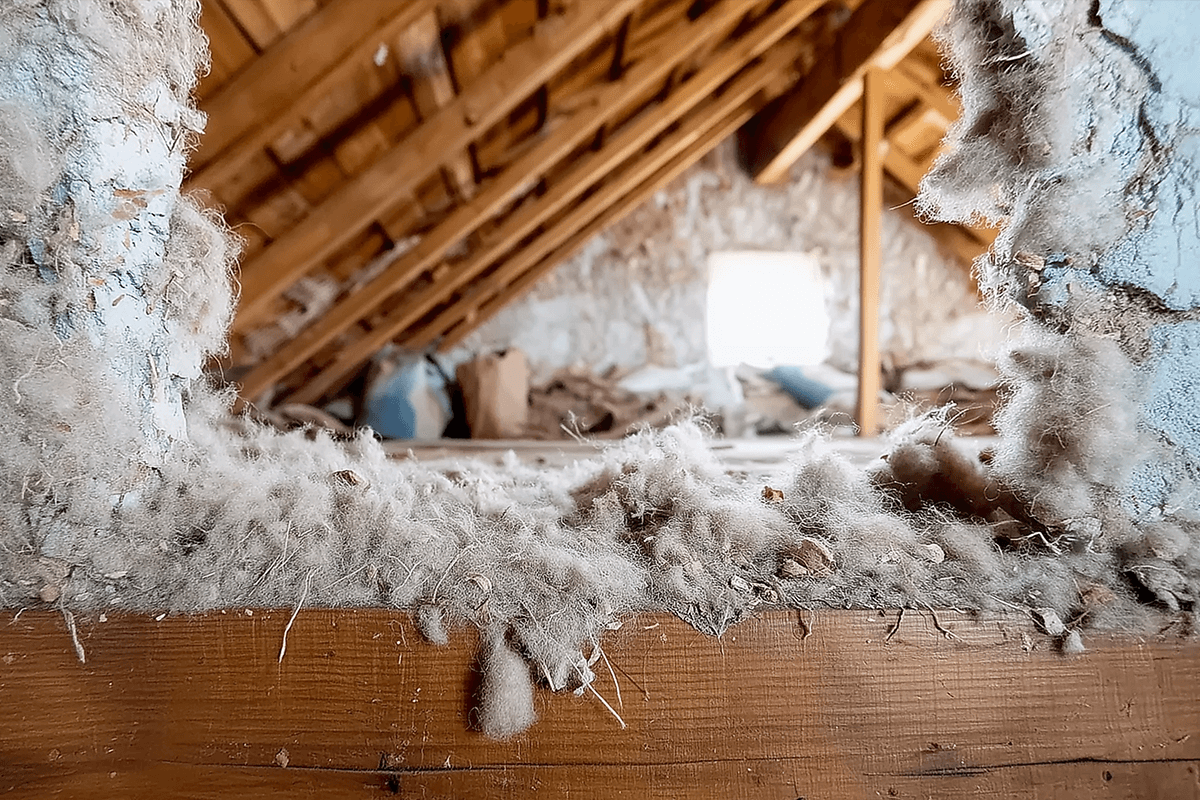
- Loose-fill insulation: Appears as fluffy, loose, greyish material, often resembling attic dust or shredded paper. This is the most dangerous type, as fibres can easily become airborne.
- Pipe asbestos insulation: Often appears as white or grey lagging wrapped around pipes, sometimes encased in a fabric or cardboard-like outer layer.
- Board or block insulation: May look like rigid panels or sheets similar to plasterboard, used inside walls or ceilings.
- Sprayed-on asbestos: A textured, cement-like coating found on ceilings, walls, or beams.
Because asbestos can resemble non-asbestos materials, visual inspection alone is not enough. Only a licensed asbestos assessor or NATA-accredited laboratory can confirm its presence
What Is Loose Fill Asbestos Insulation?
Loose fill asbestos insulation is a particularly hazardous form of insulation used in some Australian homes from the 1960s to the 1970s. It consists of raw, fluffy asbestos fibres that were pumped directly into roof cavities for thermal insulation.
The most infamous example was “Mr Fluffy” – a brand of amosite (brown asbestos) insulation installed in thousands of homes across New South Wales and the ACT.
Because the fibres are loose and easily disturbed, loose fill asbestos presents an ongoing risk of airborne contamination and can migrate into living areas over time. Homes confirmed to contain this material have been subject to government remediation or demolition programs, especially in the ACT.
How Dangerous Is Asbestos Insulation?
Asbestos insulation is extremely hazardous if disturbed. There is no known safe level of exposure to asbestos fibres. When fibres are released into the air and inhaled, they can lodge in the lungs for decades, leading to serious diseases such as:
- Mesothelioma (a rare and fatal cancer of the lung or abdominal lining)
- Asbestosis (scarring of the lung tissue)
- Lung cancer
There is no safe level of exposure to asbestos fibres. Even small amounts can pose long-term health risks, which is why professional management is critical.
How Can I Tell If My Insulation Contains Asbestos?
If your home was built before 1990, assume asbestos could be present until tested. You can’t reliably identify asbestos insulation just by looking at it. The only way to know for sure is through professional testing.
A licensed asbestos assessor can take small samples safely and have them analysed by a NATA-accredited laboratory. You should never attempt to collect samples yourself – even minor disturbance can release fibres into the air.
What Should I Do If I Find Asbestos Insulation in My Home?
If you suspect or confirm asbestos insulation, do not touch it. Disturbing the material increases the risk of fibre release. Instead:
- Leave the area undisturbed and avoid using roof spaces or disturbing wall cavities.
- Contact a licensed asbestos professional for testing or removal advice.
- Follow all safety regulations – under Australian law, only licensed removalists can legally remove or dispose of asbestos materials.
Depending on the location and type of asbestos, it may be possible to seal or encapsulate it rather than remove it entirely. A professional will assess the safest course of action.
How Much Does It Cost to Remove Asbestos Insulation?
The cost of asbestos removal varies widely depending on the size, type, and location of the material. For most homes:
- Most providers charge a minimum call-out fee
- Typical removal: ~$40–$100 per metre
- Complex jobs (e.g., loose-fill remediation/demolition) can exceed $10,000+
Always ensure removal is carried out by a licensed asbestos removalist and that waste is disposed of at an approved facility.
What’s the Safest Alternative to Asbestos Insulation?
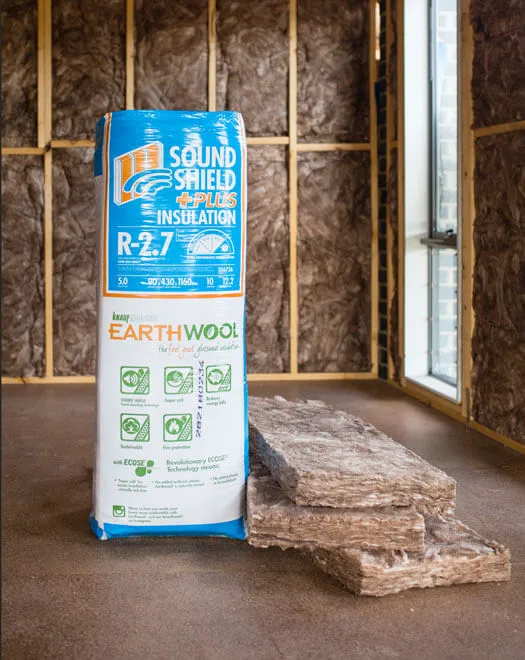
Modern insulation materials are safe, efficient, and asbestos-free. Common replacements include:
- Glasswool (fibreglass) insulation
- Polyester batts
- Cellulose (recycled paper) insulation
- Spray foam insulation
These products offer excellent thermal performance without the health risks associated with asbestos.
Key Takeaways on Asbestos and Insulation
- Asbestos was widely used for insulation in Australian homes before 1990.
- Common forms include asbestos roof insulation, loose fill asbestos insulation, and pipe asbestos insulation.
- Asbestos is highly dangerous when disturbed and should only be handled by licensed professionals.
- Homeowners should never try to identify or remove asbestos insulation themselves.
If in doubt, always seek expert advice and testing before disturbing any suspect materials.
Final Words:
Understanding asbestos and insulation is crucial for any homeowner, particularly in older Australian properties. Knowing what to look for – and when to call in professionals – can protect both your health and your home.
 Call Us
 Email Us
 Opening Hours